Deliciously Low FODMAP
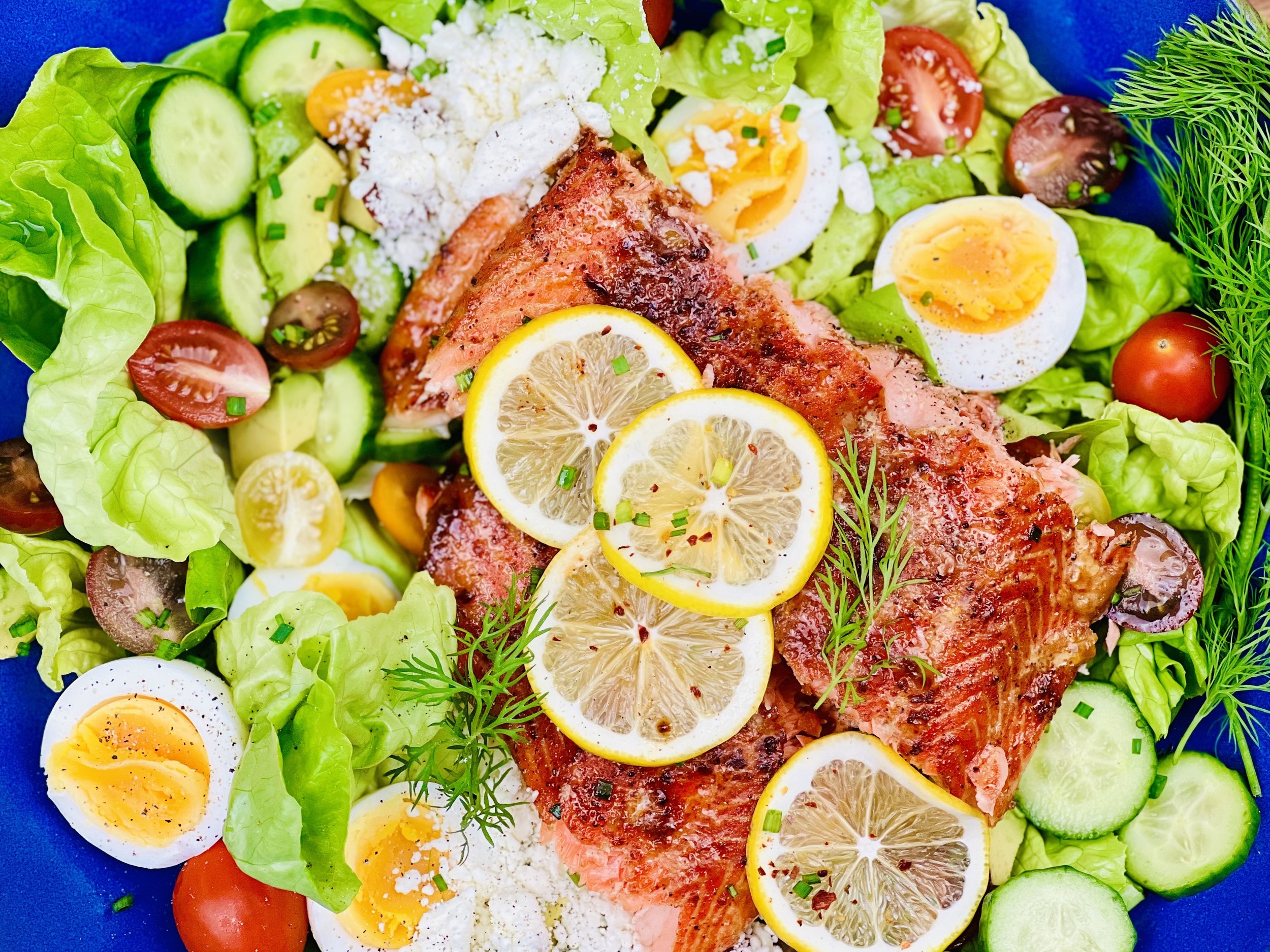
Inspire yourself with hundreds of delicious low FODMAP recipes, tips, and tools, and enjoy the abundance that is yours even when you have IBS.
Use the buttons and filters to find something specific or browse the complete collection for inspiration.
Discover a treasure trove of recipes with my FREE recipe club! Get new ideas delivered straight to your inbox every week.
Deliciously Low FODMAP is a trademark of IBS Game Changer, LLC
Filter to find Recipes and Tools
More Filtering Options
- All 829
- Appetizer 56
- BBQ 49
- Bowl 32
- Breakfast 69
- Cocktails 13
- Collection 1 58
- Collection 10 27
- Collection 11 30
- Collection 12 27
- Collection 13 31
- Collection 14 29
- Collection 15 31
- Collection 16 34
- Collection 17 31
- Collection 18 33
- Collection 19 36
- Collection 2 32
- Collection 20 33
- Collection 21 33
- Collection 22 40
- Collection 23 63
- Collection 24 48
- Collection 3 28
- Collection 4 29
- Collection 5 30
- Collection 6 32
- Collection 7 31
- Collection 8 31
- Collection 9 32
- Condiments 6
- Crock Pot 4
- Dessert 119
- Diabetes Game Changer Exception Protocol Contains Alcohol 11
- Diabetes Game Changer Exception Protocol Contains Flour 113
- Diabetes Game Changer Exception Protocol Contains Flour AND Sugar 79
- Diabetes Game Changer Exception Protocol Contains Sugar 52
- Diabetes Game Changer First Four Weeks 405
- Dinner 372
- Drink 8
- Easter 1
- Free Guide 17
- Gluten-free 688
- Gut Microbiome 2
- Guthealth 3
- Holidays 74
- IBS Triggers 4
- Keto Friendly 180
- Lactose-Free 184
- Low Carb 24
The Gut-Brain Reset Series: Part 2 - Vagus Nerve Exercises for Gut Health
In this post, you’re going to learn how to use your vagus nerve highway to send calming signals to your gut.
In Part 1, I talked about the gut-brain highway—the constant communication between your digestive system and your nervous system.
In this post, you’re going to learn how to actually use that highway to send calming signals to your gut.
The key player? Your vagus nerve.
This is where things get practical. No complicated protocols, no expensive supplements. Just simple exercises that can shift your nervous system out of fight-or-flight and into rest-and-digest mode—right when you need it most.
What Is Vagal Tone (And Why Should You Care)?
Think of your vagus nerve like the brake pedal on your stress response. When it's working well (high vagal tone), you can calm down quickly after stress. Your digestion works smoothly. You feel resilient.
When vagal tone is poor, you stay stuck in stress mode. Your gut stays sensitive and reactive. Even small triggers feel overwhelming.
The amazing news? Vagal tone is trainable. Just like you can strengthen a muscle, you can strengthen your vagus nerve's ability to calm your system.
People with IBS often have lower vagal tone, which means their nervous system struggles to shift into the parasympathetic (rest-and-digest) state. But with consistent practice, you can improve this—and see real changes in your symptoms.
The 5-Minute Morning Vagus Reset
Start your day by priming your nervous system for calm. This takes just 5 minutes, and many of my clients report it changes the entire trajectory of their day.
Here's the routine:
1. Cold Water Face Splash (30 seconds) Splash cold water on your face, especially around your eyes and cheeks. Or hold a cold, wet washcloth over your face for 30 seconds.
Why it works: Cold stimulation on your face activates the vagus nerve through something called the "dive reflex"—an ancient mechanism that immediately shifts you into parasympathetic mode.
2. Humming or Singing (2 minutes) Hum your favorite tune, sing in the shower, or just make a low humming sound. Feel the vibration in your throat and chest.
Why it works: The vagus nerve runs right past your vocal cords. The vibration from humming or singing directly stimulates it. Bonus: this is why some people find that singing or humming helps calm their stomach.
3. Gargling (1 minute) Gargle water vigorously enough that your eyes might water a bit. Do this twice.
Why it works: Like humming, this activates the muscles at the back of your throat that are connected to the vagus nerve. It's simple, but surprisingly effective.
4. Deep Belly Breathing (1.5 minutes - about 6 breaths) Place one hand on your chest, one on your belly. Breathe in slowly through your nose for a count of 4, letting your belly rise while your chest stays relatively still. Pause for 2 counts. Exhale slowly through your mouth for a count of 6.
Why it works: The exhale is longer than the inhale, which signals safety to your nervous system. Belly breathing engages your diaphragm, which has direct connections to the vagus nerve.
Do this routine right after waking up, before you check your phone or start thinking about your day. You're setting the baseline for your nervous system.
The SOS Technique: When You Feel a Flare-Up Coming
You know that feeling—your gut starts to signal trouble. Maybe you feel cramping, or that urgent sensation, or just a wave of anxiety about your symptoms. This is your emergency vagal activation technique.
The 4-7-8 Breathing Pattern:
Inhale quietly through your nose for 4 counts
Hold your breath for 7 counts
Exhale completely through your mouth for 8 counts (making a "whoosh" sound)
Repeat 4 times
This pattern is specifically designed to activate your vagus nerve and trigger the relaxation response. The extended hold and long exhale are key.
Add this tactile element: While doing the breathing, press firmly on the roof of your mouth with your tongue, and press your thumb into the palm of your opposite hand. This gives your nervous system additional sensory input to focus on, which can interrupt the symptom-anxiety spiral.
Many people report that symptoms either don't develop fully or are significantly less severe when they catch them early with this technique.
The Valsalva Maneuver: For Constipation-Predominant IBS
This one is specifically helpful if you struggle with IBS-C or have trouble with bowel movements. It stimulates the vagus nerve in a way that can promote motility.
How to do it:
Take a deep breath
Bear down gently as if you're trying to blow up a balloon but your mouth is closed (don't actually strain hard)
Hold for 10-15 seconds
Release and breathe normally
Do this 2-3 times when you're trying to have a bowel movement, but avoid doing it if you have hemorrhoids or high blood pressure.
Why it works: This briefly increases pressure in your chest and abdomen, which stimulates the vagus nerve. After you release, there's a rebound effect that can help promote gut motility.
The Ear Massage: The Weird One That Works
This sounds strange, but your ear contains a branch of the vagus nerve, and stimulating it can have surprisingly powerful effects on your gut.
Here's how:
Use your index finger to gently massage the inside of your tragus (that little triangular flap in front of your ear canal)
Use small circular motions for 30-60 seconds on each ear
You can also gently pull on your earlobes, or massage the area behind your ears
Do this anytime you feel tension or before meals. Some people find this so effective they do it during meals to help digestion.
The Post-Meal Posture Protocol
Remember from my first series how eating position matters? Here's the vagal-activation upgrade:
After eating:
Sit upright in a chair with your feet flat on the floor
Place both hands on your belly
Take 5 slow, deep belly breaths
Then sit quietly for 10 minutes (read, listen to music, or just be)
Avoid looking at screens during this time
This ritual tells your nervous system: "We're safe. We can digest." Over time, your body learns to associate eating with this calm state rather than with stress.
The Social Connection Hack
Here's one that doesn't feel like an "exercise" at all: positive social connection activates your vagus nerve.
Genuine laughter, warm conversation, feeling connected to others—these all increase vagal tone. This is why stress eating alone often feels worse than eating the same food with people you care about.
Practical application: When possible, eat meals with people who make you feel comfortable and safe. If you're eating alone, call a friend or watch something that makes you laugh genuinely.
Your Vagus Nerve Training Schedule
Don't try to do everything at once. Here's a realistic progression:
Week 1: Just the morning routine. That's it. Build the habit.
Week 2: Add the SOS breathing technique when you notice symptoms starting.
Week 3: Add the post-meal posture protocol for one meal per day.
Week 4: Add the ear massage whenever you think of it throughout the day.
After a month, these practices should feel natural. Many people notice changes in their symptoms within 2-3 weeks of consistent practice.
The Long Game
Here's what you need to know about vagus nerve work: consistency matters more than intensity. Doing the 5-minute morning routine every day for a month will have more impact than doing 30 minutes of vagal exercises once a week.
Your nervous system learns through repetition. You're essentially teaching it a new default state—from chronically stressed to resilient and responsive.
What's Next
In Part 3, I’m diving into sleep, because no amount of vagus nerve work can compensate for poor sleep. Sleep is when your gut-brain axis does its maintenance and repair work.
I'll cover the specific sleep strategies that work for IBS, why your gut symptoms might be disrupting your sleep (and vice versa), and how to build a sleep routine that actually supports healing.
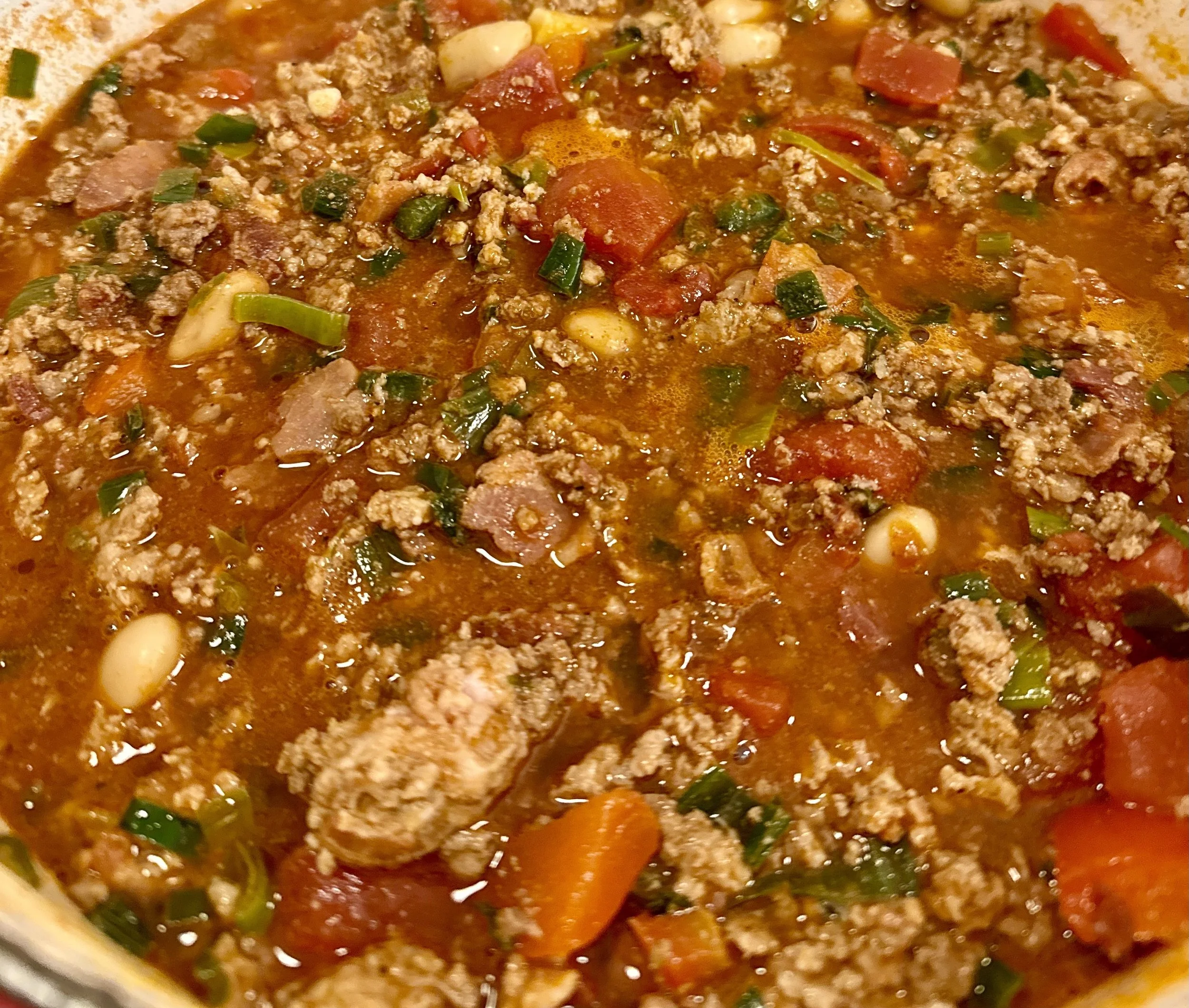
Smoky Bacon & Butter Bean Chili (low FODMAP)
20 Minutes prep • 90 Minutes cook • Low FODMAP • Gluten-Free • Makes 8 - 12 Servings
20 Minutes prep • 90 Minutes cook • Low FODMAP • Gluten-Free • Makes 8 - 12 Servings • Ok to make-ahead: Steps 1 - 4
This is a chili that earns its depth. Applewood smoked bacon and leek greens build a savory, aromatic base, while a generous hand with cumin, smoked paprika, and chili powder does the heavy lifting on flavor. A splash of beer deglazes everything beautifully, and two sneaky Parmesan rinds simmer away in the background, adding a quiet, rich umami that most people can't quite place but everyone notices. Butter beans bring a creamy, hearty texture that sets this apart from your standard bowl — rustic, smoky, and just a little unexpected.
See this new recipe in my FREE recipe club.
To streamline your search through hundreds of existing recipes, I'm moving the release of my new weekly creations to the Recipe Club on Patreon. In the club, you’ll get access to a treasure trove of low-FODMAP goodness, complete with collections and filters to use as your virtual cookbook!
Here's what awaits you in the club:
Exclusive weekly recipes: Be the first to try my latest delicious low-FODMAP creations!
Simple & Easy: My recipes continue to focus on readily available ingredients and effortless preparation, perfect for family-friendly meals (no more separate low-FODMAP meal prep!).
Hundreds of existing recipes: Gain access to my entire library of low-FODMAP recipes, all conveniently organized.
You can join for free or sign up for only $5/month. Your support fuels my passion for creating new, delicious, and easy-to-make low-FODMAP recipes just for you.
Let's go on this delicious low-FODMAP journey together.
The Gut-Brain Reset Series: Part 1 - Why Your Anxiety Makes IBS Worse (And Vice Versa)
This is the third post in my new series, where I’ll share practical, science-backed strategies that have helped thousands of people reclaim their lives from IBS. No miracle cures or one-size-fits-all solutions—just real tools that work.
You've probably noticed the pattern: stressful day at work = gut chaos. Big presentation coming up = bathroom emergency. But here's what most people don't realize: It's not just in your head, and it's not just about stress. There's actual, measurable biology at play here.
Understanding the gut-brain connection isn't just interesting science—it's the key to breaking free from the vicious cycle that keeps so many people trapped in IBS symptoms.
The Two-Way Highway You Need to Know About
Your gut and brain are connected by the vagus nerve—think of it as a fiber optic cable running between your brain and your digestive system. But here's the surprising part: 90% of the signals travel from your gut TO your brain, not the other way around.
This means:
Your gut is literally sending messages that influence your mood, anxiety levels, and stress response
Your brain is sending signals that change how your gut moves, how sensitive it is, and even what bacteria thrive there
It's a feedback loop, and in IBS, it's often stuck in the wrong direction
When you're anxious, your brain sends "danger" signals to your gut. Your gut responds by:
Speeding up or slowing down movement (hello, diarrhea or constipation)
Becoming hypersensitive to normal sensations (making everything feel worse)
Changing the balance of bacteria in your microbiome
Increasing inflammation in your intestinal lining
But here's where it gets tricky: when your gut is unhappy, it sends distress signals back to your brain, which triggers more anxiety, which makes your gut worse, which makes you more anxious...
You see the problem.
Why This Cycle Is So Hard to Break (And Why It's Not Your Fault)
I meet so many people who feel like they're failing because they "can't just relax" or "can't stop worrying" about their symptoms. Let me be clear: this is not a willpower issue.
Your nervous system has essentially learned an incorrect pattern. It's like a smoke alarm that's too sensitive—it's trying to protect you, but it's misfiring constantly. Your gut has become hypervigilant, and your brain has learned to treat normal digestive sensations as emergencies.
This is called visceral hypersensitivity, and it's one of the hallmarks of IBS. You're not imagining your symptoms. You're not weak. Your nervous system is genuinely perceiving real signals, but it's misinterpreting their importance.
The good news? Just like your nervous system learned this pattern, it can learn a new one.
The Three Types of Stress Affecting Your Gut Right Now
Not all stress is created equal when it comes to IBS. Understanding which type you're dealing with helps you choose the right intervention:
1. Acute Stress (The Meeting, The Deadline, The Argument)
This is short-term, intense stress. Your body goes into fight-or-flight mode, which literally diverts blood flow away from your digestive system. Digestion stops being a priority.
What happens in your gut: Cramping, urgent diarrhea, or complete shutdown of bowel movements. The acute stress response can trigger symptoms within minutes.
2. Chronic Stress (The Ongoing Situation, The Unresolved Problem)
This is the low-grade stress that never fully goes away—job stress, relationship issues, financial worries, or just the stress of living with IBS itself.
What happens in your gut: Changes in gut bacteria composition, increased intestinal permeability ("leaky gut"), altered motility patterns, and heightened pain sensitivity. This is the type of stress that rewires your gut-brain axis over time.
3. Anticipatory Anxiety (The "What If" Stress)
This is the worry about symptoms before they even happen. "What if I have to go to the bathroom during the meeting?" "What if I can't find a restroom?" "What if I have a flare-up?"
What happens in your gut: This type of anxiety can actually trigger the symptoms you're worried about. Your brain's prediction of danger makes your gut respond as if the danger is real. It becomes a self-fulfilling prophecy.
The Symptom-Anxiety Spiral: Breaking It Down
Here's how the cycle typically plays out:
You have an IBS flare-up (maybe triggered by food, stress, or hormones)
The discomfort creates anxiety about when it will happen again
The anxiety keeps your nervous system on high alert
The high alert state makes your gut more sensitive and reactive
Normal sensations feel more intense, triggering more anxiety
The cycle reinforces itself
Each rotation of this cycle makes both the gut symptoms and the anxiety stronger. The longer it continues, the more "grooved in" the pattern becomes.
But here's the critical insight: you can interrupt this cycle at any point. You don't have to fix everything at once.
Your Starting Point: The Awareness Practice
Before I dive into specific techniques (that's coming in Parts 2 and 3), you need to build awareness of your own patterns. For the next week, try this simple practice:
The Three-Question Check-In
Three times a day (morning, midday, evening), pause and ask yourself:
How is my gut feeling right now? (Rate 1-10)
How is my stress/anxiety level right now? (Rate 1-10)
What happened in the last 2 hours? (Note any events, foods, or situations)
Write these down. Don't judge them. Don't try to fix anything yet. Just observe.
After one week, look for patterns:
Does gut discomfort spike after certain types of stress?
Does anxiety increase after certain gut symptoms?
Are there times when your gut is calm even when you're stressed (or vice versa)?
What's the typical time delay between a stressful event and gut symptoms?
This awareness is foundational. You can't change a pattern you can't see.
What's Coming Next
In Part 2, I'll cover specific vagus nerve exercises that can literally calm your gut in minutes. These are physical techniques that interrupt the stress-gut cycle at the biological level—no meditation cushion required.
In Part 3, I'll tackle sleep, because poor sleep is both a cause and consequence of IBS, and fixing it can break multiple vicious cycles at once.
In Part 4, I'll put it all together with a comprehensive protocol for rewiring your gut-brain connection over time.
The Truth About Healing
Here's what I want you to remember: The gut-brain connection is powerful, but that power works both ways. The same mechanisms that make anxiety worse for your gut are the mechanisms you can use to make your gut better.
You're not stuck with this cycle forever. Understanding it is the first step to changing it.
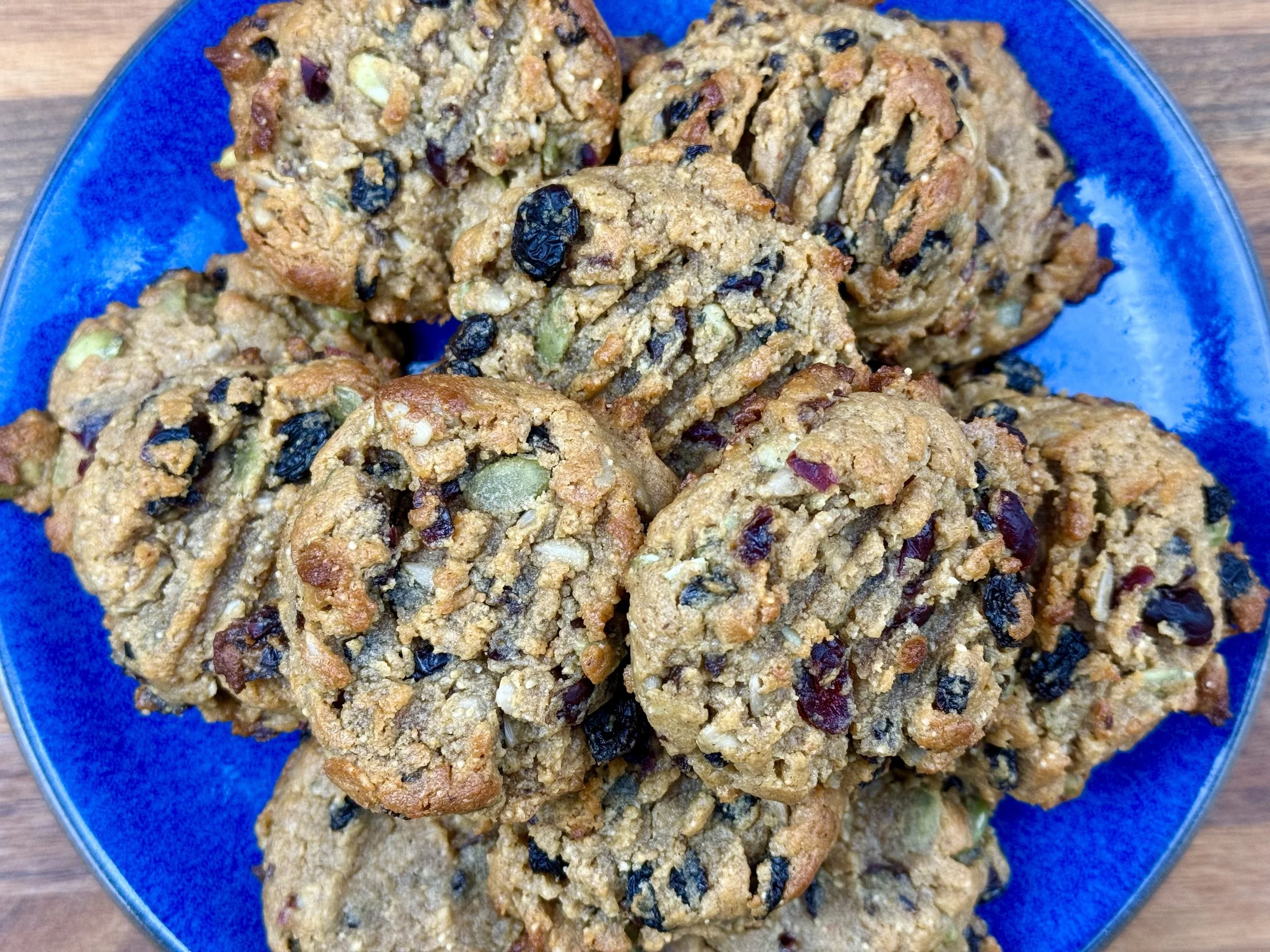
Peanut Butter Power Cookies (low FODMAP)
10 Minutes prep • 10 Minutes cook/tray • Low FODMAP • Gluten-Free • Makes 24
10 Minutes prep • 10 Minutes cook/tray • Low FODMAP • Gluten-Free • Makes 24 • Ok to make-ahead: Steps 1 - 6
These flourless peanut butter cookies are made with just a handful of real ingredients — creamy natural peanut butter, vanilla bean paste, eggs, and a crunchy/chewy combo of seeds and dried fruit. It’s a satisfying cookie that's naturally gluten-free and genuinely good for you! No flour, no weird additives, no blood sugar spike — just a cookie worth eating.
Note: Keep the serving size in mind (1) because both cranberries and currants contain fructans. One cookie is low FODMAP—but more than that may give you trouble.
See this new recipe in my FREE recipe club.
To streamline your search through hundreds of existing recipes, I'm moving the release of my new weekly creations to the Recipe Club on Patreon. In the club, you’ll get access to a treasure trove of low-FODMAP goodness, complete with collections and filters to use as your virtual cookbook!
Here's what awaits you in the club:
Exclusive weekly recipes: Be the first to try my latest delicious low-FODMAP creations!
Simple & Easy: My recipes continue to focus on readily available ingredients and effortless preparation, perfect for family-friendly meals (no more separate low-FODMAP meal prep!).
Hundreds of existing recipes: Gain access to my entire library of low-FODMAP recipes, all conveniently organized.
You can join for free or sign up for only $5/month. Your support fuels my passion for creating new, delicious, and easy-to-make low-FODMAP recipes just for you.
Let's go on this delicious low-FODMAP journey together.
Taking Back Control: Your IBS Journey Starts Here (Part 3 of My Tips Series)
This is the third post in my new series, where I’ll share practical, science-backed strategies that have helped thousands of people reclaim their lives from IBS. No miracle cures or one-size-fits-all solutions—just real tools that work.
If you’re reading this, chances are you know the struggle. The unpredictable flare-ups. The canceled plans. The constant worry about where the nearest bathroom is. Living with IBS can feel like you’re trapped in a cycle you didn’t ask for and can’t escape.
But here’s what I’ve learned after years of working with IBS patients and navigating this condition myself: you have more control than you think.
This is the third post in my new series, where I’ll share practical, science-backed strategies that have helped thousands of people reclaim their lives from IBS. No miracle cures or one-size-fits-all solutions—just real tools that work.
The Eating Position Reset
Most of us eat hunched over a desk, scrolling through our phones, or slouched on the couch. But your physical position while eating directly affects digestion.
When you're hunched forward, you compress your digestive organs. This can slow gastric emptying, increase bloating, and worsen reflux. For people with IBS, this mechanical pressure can be the difference between a comfortable meal and hours of discomfort.
The game changer: Sit upright with your feet flat on the floor. Keep your shoulders back. And here's the kicker—stay seated for at least 10 minutes after you finish eating. No jumping up to wash dishes or rushing back to work.
The practical tip: Think of it as meditation time. Those 10 minutes of sitting upright after meals give your stomach time to start processing food in an optimal position. Read something enjoyable, chat with family, or just sit. Your gut will thank you.
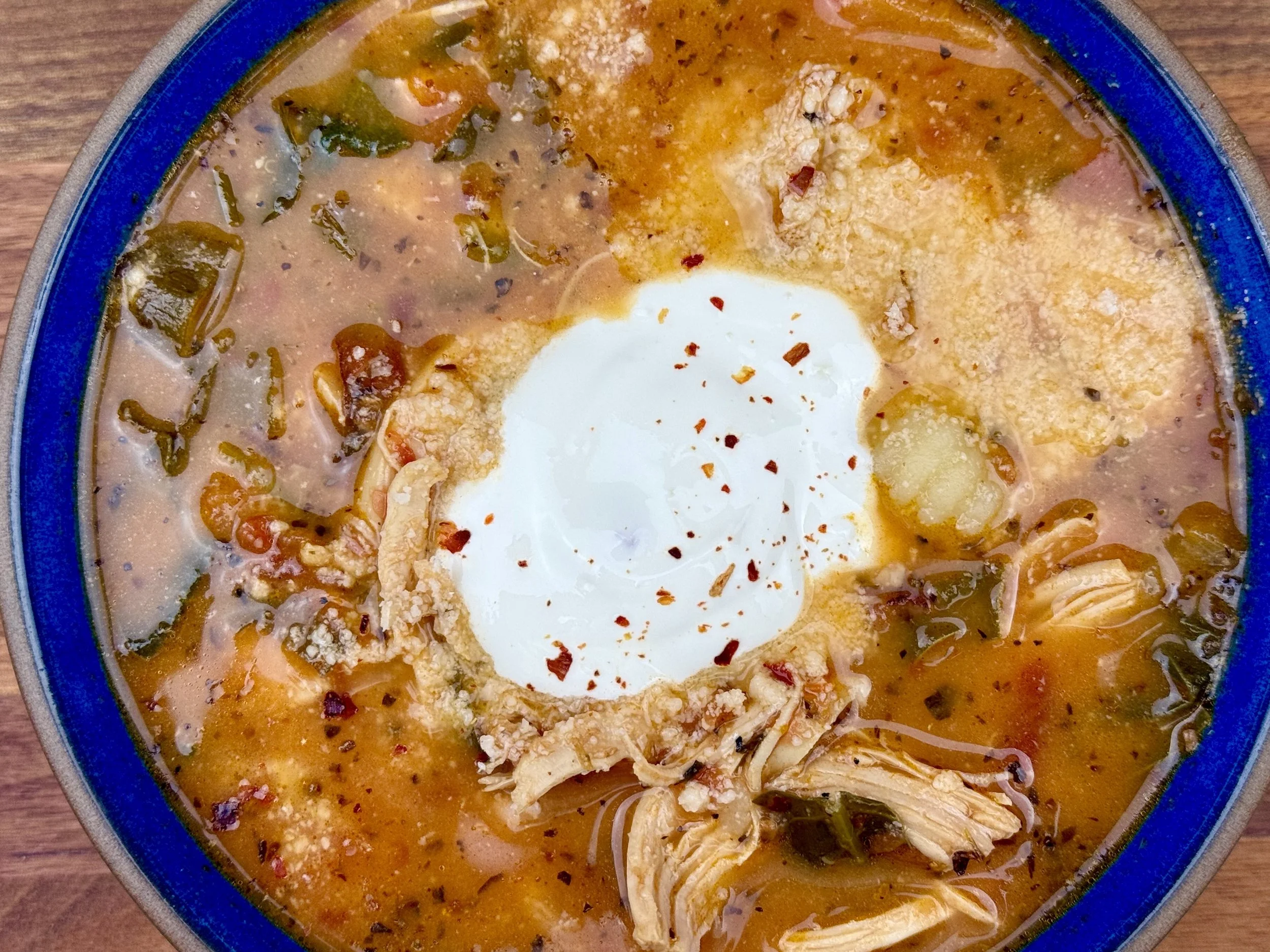
Rich and Flavorful Chicken Gnocchi Soup (low FODMAP)
25 Minutes prep • 25 Minutes cook • Low FODMAP • Gluten-Free • Serves 6
25 Minutes prep • 25 Minutes cook • Low FODMAP • Gluten-Free • Serves 6 • Ok to make-ahead: Steps 1 - 4
This is the soup that proves you don't have to choose between flavor and feeling like a functional human being. Tender gluten-free gnocchi in a rich, creamy tomato broth with perfectly seasoned chicken—all while keeping FODMAPs in check. No onions. No garlic. Just leek greens, smoky bacon, sweet red peppers, and a double cheese situation that makes this genuinely satisfying. The kind of comfort food that actually comforts your entire digestive system, not just your soul.
See this new recipe in my FREE recipe club.
To streamline your search through hundreds of existing recipes, I'm moving the release of my new weekly creations to the Recipe Club on Patreon. In the club, you’ll get access to a treasure trove of low-FODMAP goodness, complete with collections and filters to use as your virtual cookbook!
Here's what awaits you in the club:
Exclusive weekly recipes: Be the first to try my latest delicious low-FODMAP creations!
Simple & Easy: My recipes continue to focus on readily available ingredients and effortless preparation, perfect for family-friendly meals (no more separate low-FODMAP meal prep!).
Hundreds of existing recipes: Gain access to my entire library of low-FODMAP recipes, all conveniently organized.
You can join for free or sign up for only $5/month. Your support fuels my passion for creating new, delicious, and easy-to-make low-FODMAP recipes just for you.
Let's go on this delicious low-FODMAP journey together.
Taking Back Control: Your IBS Journey Starts Here (Part 2 of My Tips Series)
This is the second post in my new series, where I’ll share practical, science-backed strategies that have helped thousands of people reclaim their lives from IBS. No miracle cures or one-size-fits-all solutions—just real tools that work.
If you’re reading this, chances are you know the struggle. The unpredictable flare-ups. The canceled plans. The constant worry about where the nearest bathroom is. Living with IBS can feel like you’re trapped in a cycle you didn’t ask for and can’t escape.
But here’s what I’ve learned after years of working with IBS patients and navigating this condition myself: you have more control than you think.
This is the second post in my new series, where I’ll share practical, science-backed strategies that have helped thousands of people reclaim their lives from IBS. No miracle cures or one-size-fits-all solutions—just real tools that work.
The 30-Minute Rule
This one sounds almost too simple, but it's powerful: Don't eat within 30 minutes of a stressful event or situation.
Your gut and your brain are in constant communication via the gut-brain axis. When you're stressed, your digestive system literally changes how it functions. Eating while your stress response is activated is like trying to have a calm conversation in the middle of a fire alarm.
Had a tense meeting? Wait 30 minutes before lunch. Just finished a difficult phone call? Hold off on that snack. Give your nervous system time to shift out of fight-or-flight mode. And while you’re waiting, take some long, deep breaths and go for a short walk outside.
The practical tip: Set a timer on your phone. Use those 30 minutes to do some deep breathing, take a short walk, or listen to music. You're not just delaying a meal—you're changing the entire environment in which your gut has to work.
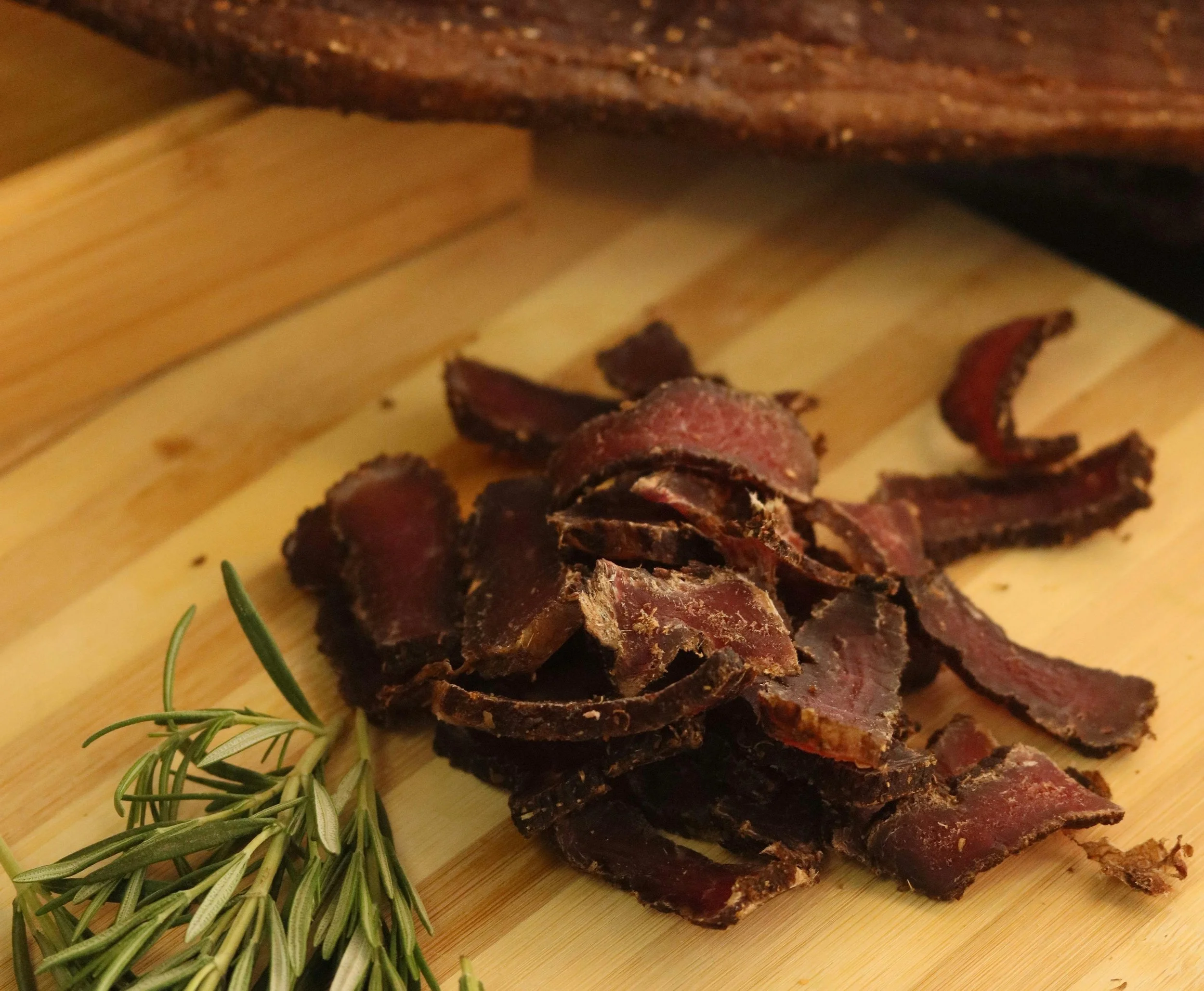
Homemade Low FODMAP Beef Jerky
60 Minutes prep • 3 - 6 Hours cook • Low FODMAP • Gluten-Free • Makes 24
60 Minutes prep • 3 - 6 Hours cook • Low FODMAP • Gluten-Free • Makes 24 • Ok to make-ahead: Steps 1 - 2
Tired of scanning jerky labels only to find onion powder, garlic powder, and gut-triggering mystery ingredients? This Low FODMAP Beef Jerky is your new go-to protein snack—portable, shelf-stable, and completely IBS-safe. I’ve replaced the usual offenders with the umami flavor of soy sauce, a touch of IBS-friendly sweetness, and the zesty flavor of lime. No onion, no garlic, no honey—just delicious jerky that won't send your stomach into chaos. Perfect for road trips, hiking, or emergency desk snacks when you need protein you can actually trust.
See this new recipe in my FREE recipe club.
To streamline your search through hundreds of existing recipes, I'm moving the release of my new weekly creations to the Recipe Club on Patreon. In the club, you’ll get access to a treasure trove of low-FODMAP goodness, complete with collections and filters to use as your virtual cookbook!
Here's what awaits you in the club:
Exclusive weekly recipes: Be the first to try my latest delicious low-FODMAP creations!
Simple & Easy: My recipes continue to focus on readily available ingredients and effortless preparation, perfect for family-friendly meals (no more separate low-FODMAP meal prep!).
Hundreds of existing recipes: Gain access to my entire library of low-FODMAP recipes, all conveniently organized.
You can join for free or sign up for only $5/month. Your support fuels my passion for creating new, delicious, and easy-to-make low-FODMAP recipes just for you.
Let's go on this delicious low-FODMAP journey together.
Taking Back Control: Your IBS Journey Starts Here (Part 1 of My Tips Series)
This is the first post in my new series, where I’ll share practical, science-backed strategies that have helped thousands of people reclaim their lives from IBS. No miracle cures or one-size-fits-all solutions—just real tools that work.
If you’re reading this, chances are you know the struggle. The unpredictable flare-ups. The canceled plans. The constant worry about where the nearest bathroom is. Living with IBS can feel like you’re trapped in a cycle you didn’t ask for and can’t escape.
But here’s what I’ve learned after years of working with IBS patients and navigating this condition myself: you have more control than you think.
This is the first post in my new series, where I’ll share practical, science-backed strategies that have helped thousands of people reclaim their lives from IBS. No miracle cures or one-size-fits-all solutions—just real tools that work.
Today’s Game Changers: Three Simple Strategies to Start With
1. The Food Symptom Diary (But Make It Actually Useful)
I know, I know—you’ve probably been told to keep a food diary before. But most people do it wrong, and then they give up because it feels pointless.
Here’s the game-changing approach: Don’t just write down what you ate. Track these five things:
What you ate (be specific—brands matter!)
When you ate (exact times)
Your stress level (1-10 scale)
Your symptoms (what, when, and severity)
Your sleep quality from the night before
Why? Because IBS isn’t just about food. It’s about the whole picture. That “trigger food” might only be a problem when you’re stressed or sleep-deprived. This detailed tracking reveals patterns you’d never see otherwise.
The practical tip: Use your phone’s notes app or grab a small notebook. Do this consistently for just two weeks. That’s it. Two weeks of data can reveal game-changing insights.
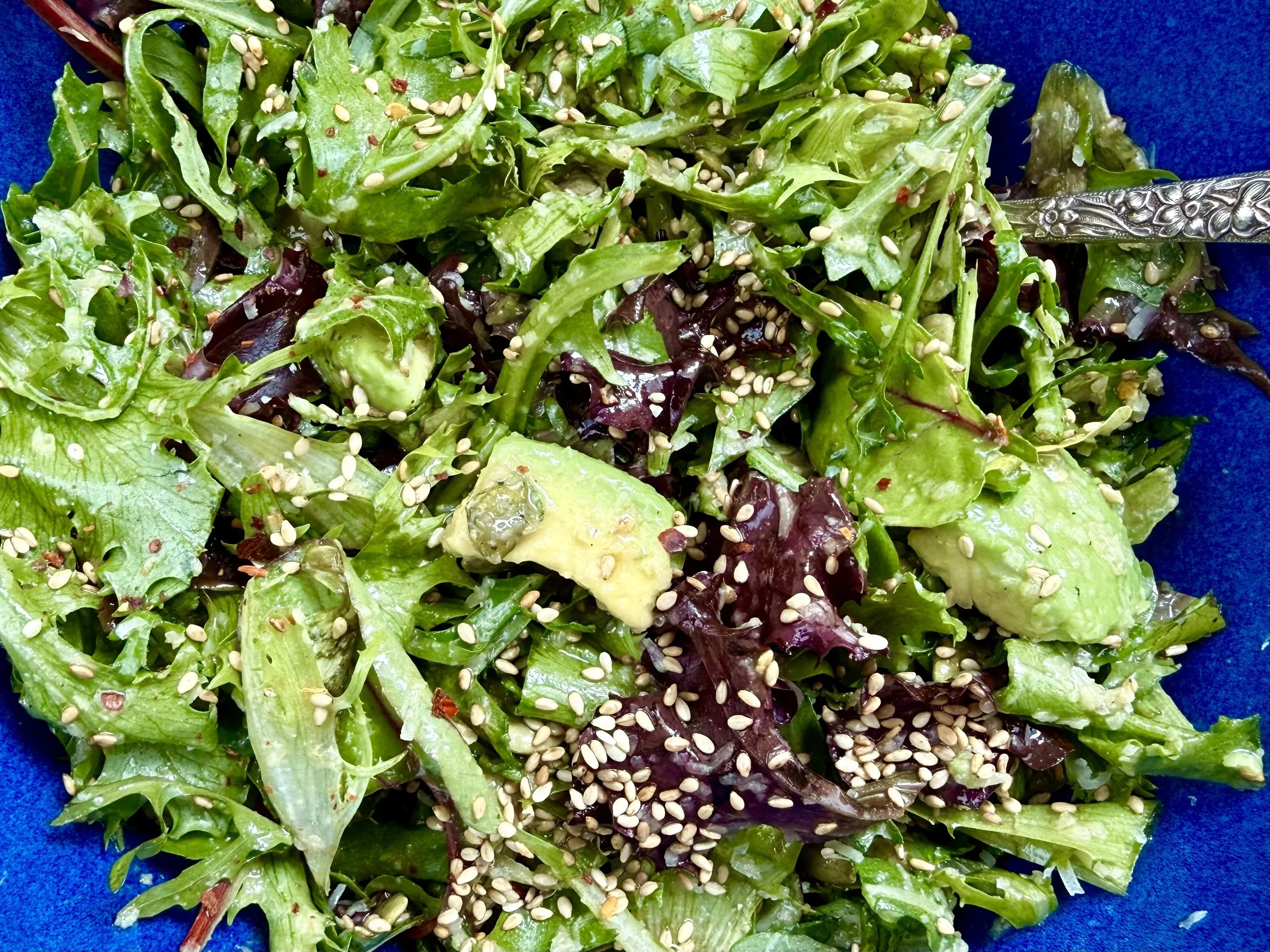
Herbed Greens with Parmesan, Avocado & Toasted Sesame (Low FODMAP)
15 Minutes prep • Low FODMAP • Gluten-Free • Serves 4
15 Minutes prep • Low FODMAP • Gluten-Free • Serves 4 • Ok to make-ahead: Steps 1 - 3
This salad is all about layers of flavor and texture—crisp greens meet fragrant fresh herbs, creamy avocado, nutty parmesan, and the quiet crunch of toasted sesame seeds. The dressing brings it all together with bright citrus, a whisper of sweetness, and the deep, toasty richness of sesame oil. It's the kind of salad that feels both elegant and effortless, perfect for when you want something that tastes special but comes together quickly.
See this new recipe in my FREE recipe club.
To streamline your search through hundreds of existing recipes, I'm moving the release of my new weekly creations to the Recipe Club on Patreon. In the club, you’ll get access to a treasure trove of low-FODMAP goodness, complete with collections and filters to use as your virtual cookbook!
Here's what awaits you in the club:
Exclusive weekly recipes: Be the first to try my latest delicious low-FODMAP creations!
Simple & Easy: My recipes continue to focus on readily available ingredients and effortless preparation, perfect for family-friendly meals (no more separate low-FODMAP meal prep!).
Hundreds of existing recipes: Gain access to my entire library of low-FODMAP recipes, all conveniently organized.
You can join for free or sign up for only $5/month. Your support fuels my passion for creating new, delicious, and easy-to-make low-FODMAP recipes just for you.
Let's go on this delicious low-FODMAP journey together.
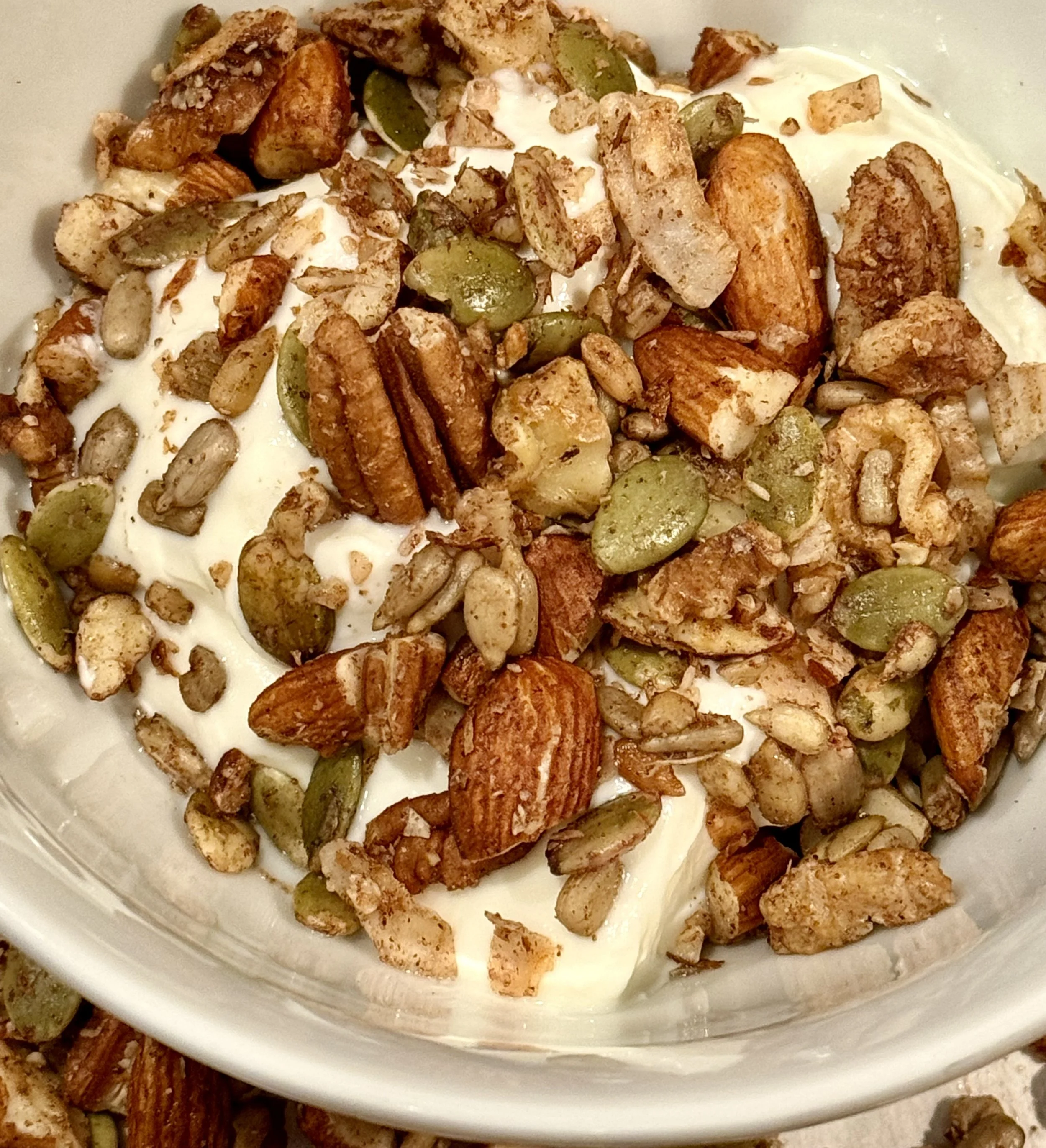
Crunchy Nut & Seed Granola (Low FODMAP)
10 Minutes prep • 20 Minutes cook • Low FODMAP • Gluten-Free • Makes 4 Cups
10 Minutes prep • 20 Minutes cook • Low FODMAP • Gluten-Free • Makes 4 Cups • Ok to make-ahead: Steps 1 - 5
Missing that satisfying crunch of traditional granola? This IBS-friendly version delivers all the toasty, nutty goodness without the gut-disrupting oats, honey, or dried fruit that can trigger symptoms. Packed with protein-rich nuts and seeds, lightly sweetened with gut-friendly allulose, and perfectly customizable to your taste, this granola proves that eating for your IBS doesn't mean sacrificing flavor or texture. Whether you sprinkle it over lactose-free yogurt, enjoy it by the handful, or use it as an ice cream topper, you're getting a genuinely satisfying snack that won't leave you bloated or uncomfortable. It's a true game changer for breakfast and beyond.
See this new recipe in my FREE recipe club.
To streamline your search through hundreds of existing recipes, I'm moving the release of my new weekly creations to the Recipe Club on Patreon. In the club, you’ll get access to a treasure trove of low-FODMAP goodness, complete with collections and filters to use as your virtual cookbook!
Here's what awaits you in the club:
Exclusive weekly recipes: Be the first to try my latest delicious low-FODMAP creations!
Simple & Easy: My recipes continue to focus on readily available ingredients and effortless preparation, perfect for family-friendly meals (no more separate low-FODMAP meal prep!).
Hundreds of existing recipes: Gain access to my entire library of low-FODMAP recipes, all conveniently organized.
You can join for free or sign up for only $5/month. Your support fuels my passion for creating new, delicious, and easy-to-make low-FODMAP recipes just for you.
Let's go on this delicious low-FODMAP journey together.
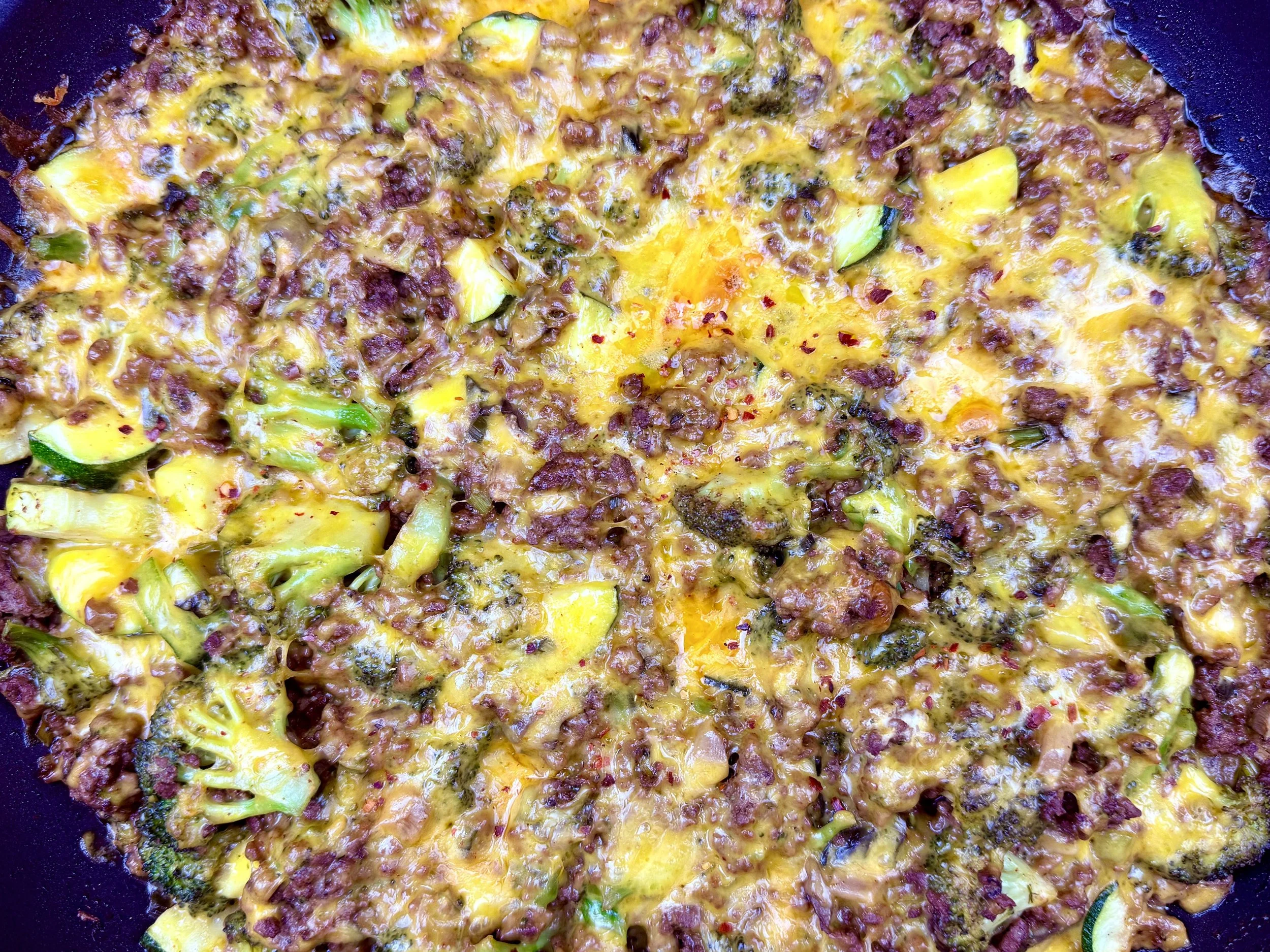
Smoky Beef & Veggie Skillet with Melted Cheddar (Low FODMAP)
10 Minutes prep • 20 Minutes cook • Low FODMAP • Gluten-Free • Serves 6
10 Minutes prep • 20 Minutes cook • Low FODMAP • Gluten-Free • Serves 6 • Ok to make-ahead: Steps 1 - 5
This hearty one-pan wonder brings together seasoned ground beef, tender vegetables, and two types of melted cheese for a satisfying weeknight dinner that's surprisingly simple. The combination of smoked paprika and ancho chili powder gives the dish a warm, smoky depth, while broccoli, mushrooms, and zucchini add color, texture, and nutrition to every bite. Best of all, it goes from stovetop to oven in the same skillet, meaning minimal cleanup and maximum flavor. The creamy, cheesy sauce ties everything together, creating a comforting meal that's perfect for busy evenings when you want something delicious without the fuss. Serve it straight from the skillet with a fresh green salad on the side for a complete, crowd-pleasing dinner.
See this new recipe in my FREE recipe club.
To streamline your search through hundreds of existing recipes, I'm moving the release of my new weekly creations to the Recipe Club on Patreon. In the club, you’ll get access to a treasure trove of low-FODMAP goodness, complete with collections and filters to use as your virtual cookbook!
Here's what awaits you in the club:
Exclusive weekly recipes: Be the first to try my latest delicious low-FODMAP creations!
Simple & Easy: My recipes continue to focus on readily available ingredients and effortless preparation, perfect for family-friendly meals (no more separate low-FODMAP meal prep!).
Hundreds of existing recipes: Gain access to my entire library of low-FODMAP recipes, all conveniently organized.
You can join for free or sign up for only $5/month. Your support fuels my passion for creating new, delicious, and easy-to-make low-FODMAP recipes just for you.
Let's go on this delicious low-FODMAP journey together.
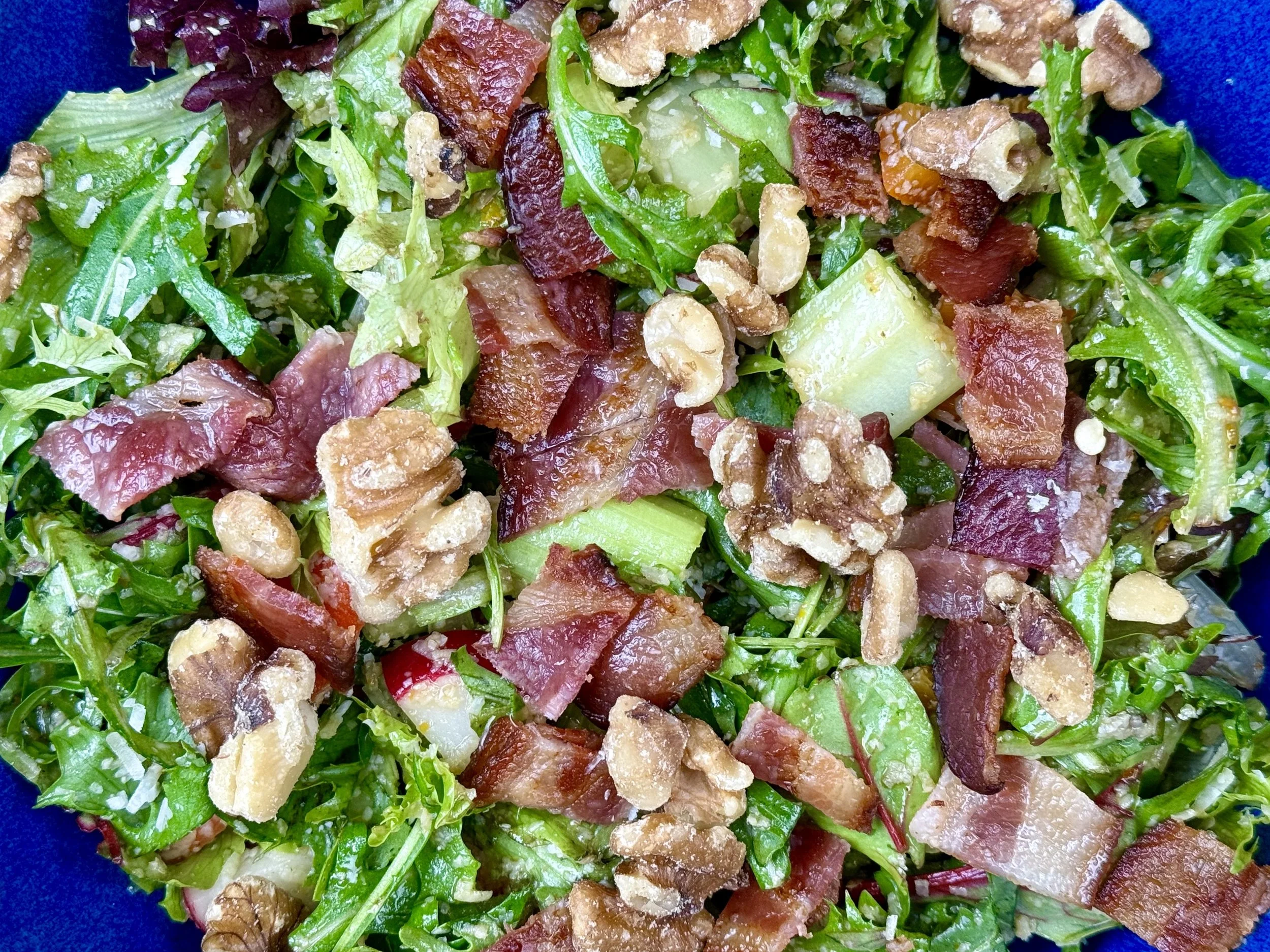
Winter Salad with Bacon, Walnuts, and Orange Thyme Vinaigrette (Low FODMAP)
15 Minutes prep • 10 Minutes cook • Low FODMAP • Gluten-Free • Serves 6
15 Minutes prep • 10 Minutes cook • Low FODMAP • Gluten-Free • Serves 6 • Ok to make-ahead: Steps 1 - 3
This vibrant, nutrient-packed salad is a true IBS game changer! Loaded with gut-friendly ingredients, it delivers satisfying crunch and bold flavors without triggering digestive distress.
Walnuts and pumpkin seeds bring healthy fats and gentle fiber, while baby arugula and mixed greens provide vitamins without the gas-inducing cruciferous overload. Crispy bacon adds irresistible savory notes, and dried cranberries offer natural sweetness that won't spike your blood sugar.
The real magic happens in the orange-thyme vinaigrette—bright, herbaceous, and made with Allulose, a low-FODMAP sweetener that's gentle on your gut while delivering perfect sweet-tart balance (you can also use white sugar if you’re not watching your carbs!) Parmesan brings aged-cheese umami without the lactose concerns of softer cheeses.
See this new recipe in my FREE recipe club.
To streamline your search through hundreds of existing recipes, I'm moving the release of my new weekly creations to the Recipe Club on Patreon. In the club, you’ll get access to a treasure trove of low-FODMAP goodness, complete with collections and filters to use as your virtual cookbook!
Here's what awaits you in the club:
Exclusive weekly recipes: Be the first to try my latest delicious low-FODMAP creations!
Simple & Easy: My recipes continue to focus on readily available ingredients and effortless preparation, perfect for family-friendly meals (no more separate low-FODMAP meal prep!).
Hundreds of existing recipes: Gain access to my entire library of low-FODMAP recipes, all conveniently organized.
You can join for free or sign up for only $5/month. Your support fuels my passion for creating new, delicious, and easy-to-make low-FODMAP recipes just for you.
Let's go on this delicious low-FODMAP journey together.
Peanut Butter Kitchen Sink Cookies (Low FODMAP)
10 Minutes prep • 10 Minutes cook • Low FODMAP • Gluten-Free • Makes 24
10 Minutes prep • 10 Minutes cook • Low FODMAP • Gluten-Free • Makes 24 • Ok to make-ahead: Steps 1 - 7
Sometimes the best recipes are the ones that seem too simple to be true—and these cookies are living proof. With just a handful of pantry staples and no flour in sight, you'd never guess these chewy, nutty cookies are both low FODMAP and keto-friendly. Natural peanut butter creates an incredibly rich base, while chopped macadamia nuts add buttery crunch, and tart cranberries bring pops of fruity brightness. Sweetened with allulose, they're gentle on blood sugar without any weird aftertaste (though regular sugar works great too). Whether you need a quick dessert or a portable snack, these cookies prove that gut-friendly eating doesn't mean boring eating. Mix, scoop, bake, and watch them disappear.

See this new recipe in my FREE recipe club.
To streamline your search through hundreds of existing recipes, I'm moving the release of my new weekly creations to the Recipe Club on Patreon. In the club, you’ll get access to a treasure trove of low-FODMAP goodness, complete with collections and filters to use as your virtual cookbook!
Here's what awaits you in the club:
Exclusive weekly recipes: Be the first to try my latest delicious low-FODMAP creations!
Simple & Easy: My recipes continue to focus on readily available ingredients and effortless preparation, perfect for family-friendly meals (no more separate low-FODMAP meal prep!).
Hundreds of existing recipes: Gain access to my entire library of low-FODMAP recipes, all conveniently organized.
You can join for free or sign up for only $5/month. Your support fuels my passion for creating new, delicious, and easy-to-make low-FODMAP recipes just for you.
Let's go on this delicious low-FODMAP journey together.
Gut-Friendly Strawberry Cheesecake (low FODMAP)
20 Minutes prep • 60 Minutes cook • 60 Minutes chill • Low FODMAP • Gluten-Free • Serves 8
20 Minutes prep • 60 Minutes cook • 60 Minutes chill • Low FODMAP • Gluten-Free • Serves 8 • Ok to make-ahead: Steps 1 - 6
Finally, a cheesecake that loves your gut back! This isn't some sad imitation—it's the real deal, with a buttery almond-coconut crust and impossibly silky filling. By swapping in lactose-free cream cheese and sour cream, we've eliminated the FODMAPs without sacrificing that tangy richness, and with allulose as a sugar alternative, keto friends can dive in too. This cheesecake proves that eating for your gut health doesn't mean giving up the foods you love—it just means getting a little creative.

See this new recipe in my FREE recipe club.
To streamline your search through hundreds of existing recipes, I'm moving the release of my new weekly creations to the Recipe Club on Patreon. In the club, you’ll get access to a treasure trove of low-FODMAP goodness, complete with collections and filters to use as your virtual cookbook!
Here's what awaits you in the club:
Exclusive weekly recipes: Be the first to try my latest delicious low-FODMAP creations!
Simple & Easy: My recipes continue to focus on readily available ingredients and effortless preparation, perfect for family-friendly meals (no more separate low-FODMAP meal prep!).
Hundreds of existing recipes: Gain access to my entire library of low-FODMAP recipes, all conveniently organized.
You can join for free or sign up for only $5/month. Your support fuels my passion for creating new, delicious, and easy-to-make low-FODMAP recipes just for you.
Let's go on this delicious low-FODMAP journey together.
Creamy Blue Cheese Puff Pastry Bites (Low FODMAP)
5 Minutes prep • 20 Minutes cook • Low FODMAP • Gluten-Free • Makes 1
5 Minutes prep • 20 Minutes cook • Low FODMAP • Gluten-Free • Makes 18
These elegant puff pastry bites prove you can entertain confidently while keeping your gut happy. The game changer? Puff pastry is naturally low-FODMAP in moderate portions, aged blue cheese is surprisingly well-tolerated since aging reduces lactose, and we're using only the green tops of green onions—the low-FODMAP part—for flavor without triggers. In just 25 minutes, you'll have restaurant-worthy appetizers with impressive golden layers and bold, creamy filling that feels indulgent, not restrictive. This is food that doesn't force you to choose between enjoying life and feeling good—it's about reclaiming those moments, the dinner parties and celebrations, without the fear of what comes after.

See this new recipe in my FREE recipe club.
To streamline your search through hundreds of existing recipes, I'm moving the release of my new weekly creations to the Recipe Club on Patreon. In the club, you’ll get access to a treasure trove of low-FODMAP goodness, complete with collections and filters to use as your virtual cookbook!
Here's what awaits you in the club:
Exclusive weekly recipes: Be the first to try my latest delicious low-FODMAP creations!
Simple & Easy: My recipes continue to focus on readily available ingredients and effortless preparation, perfect for family-friendly meals (no more separate low-FODMAP meal prep!).
Hundreds of existing recipes: Gain access to my entire library of low-FODMAP recipes, all conveniently organized.
You can join for free or sign up for only $5/month. Your support fuels my passion for creating new, delicious, and easy-to-make low-FODMAP recipes just for you.
Let's go on this delicious low-FODMAP journey together.
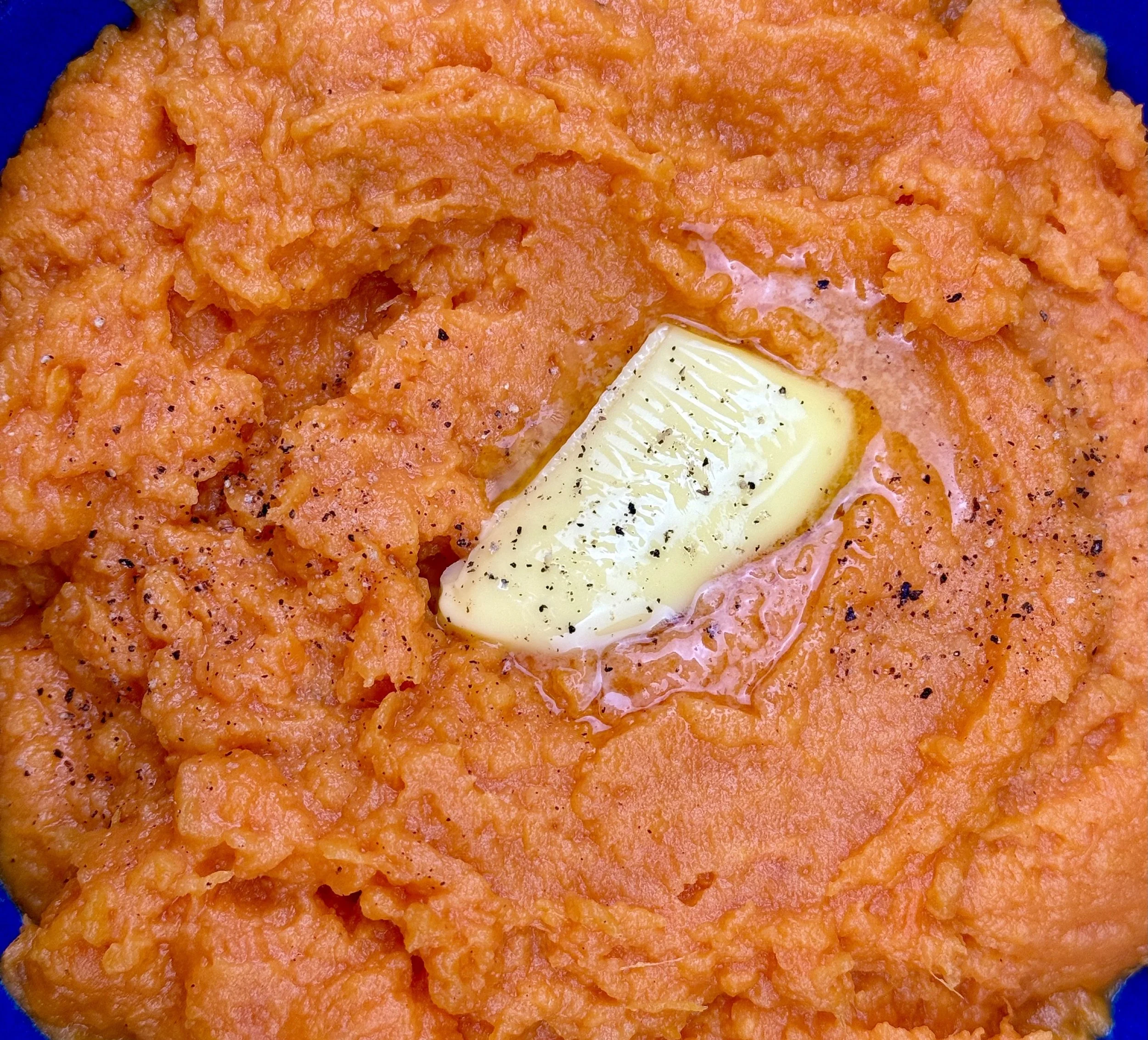
Creamy Maple Sweet Potato Mash (Low FODMAP)
10 Minutes prep • 60-75 Minutes cook • Low FODMAP • Gluten-Free • Serves 6
10 Minutes prep • 60-75 Minutes cook • Low FODMAP • Gluten-Free • Serves 6 • Ok to make-ahead: Steps 1 - 7
When the holidays come to an end, don’t leave the sweet potatoes behind! Sweet potatoes are naturally lower in FODMAPs than regular white potatoes, and roasting them whole brings out their natural sweetness without any digestive drama. The secret is keeping it simple: butter, a touch of maple syrup, and cream (or lactose-free milk). Roasting the potatoes until they're fork-tender makes them incredibly creamy without any boiling or waterlogging. This is comfort food that actually comforts. Whether it's alongside roasted chicken or as a cozy side dish, these sweet potatoes deliver all the satisfaction without the digestive stress.
See this new recipe in my FREE recipe club.
To streamline your search through hundreds of existing recipes, I'm moving the release of my new weekly creations to the Recipe Club on Patreon. In the club, you’ll get access to a treasure trove of low-FODMAP goodness, complete with collections and filters to use as your virtual cookbook!
Here's what awaits you in the club:
Exclusive weekly recipes: Be the first to try my latest delicious low-FODMAP creations!
Simple & Easy: My recipes continue to focus on readily available ingredients and effortless preparation, perfect for family-friendly meals (no more separate low-FODMAP meal prep!).
Hundreds of existing recipes: Gain access to my entire library of low-FODMAP recipes, all conveniently organized.
You can join for free or sign up for only $5/month. Your support fuels my passion for creating new, delicious, and easy-to-make low-FODMAP recipes just for you.
Let's go on this delicious low-FODMAP journey together.
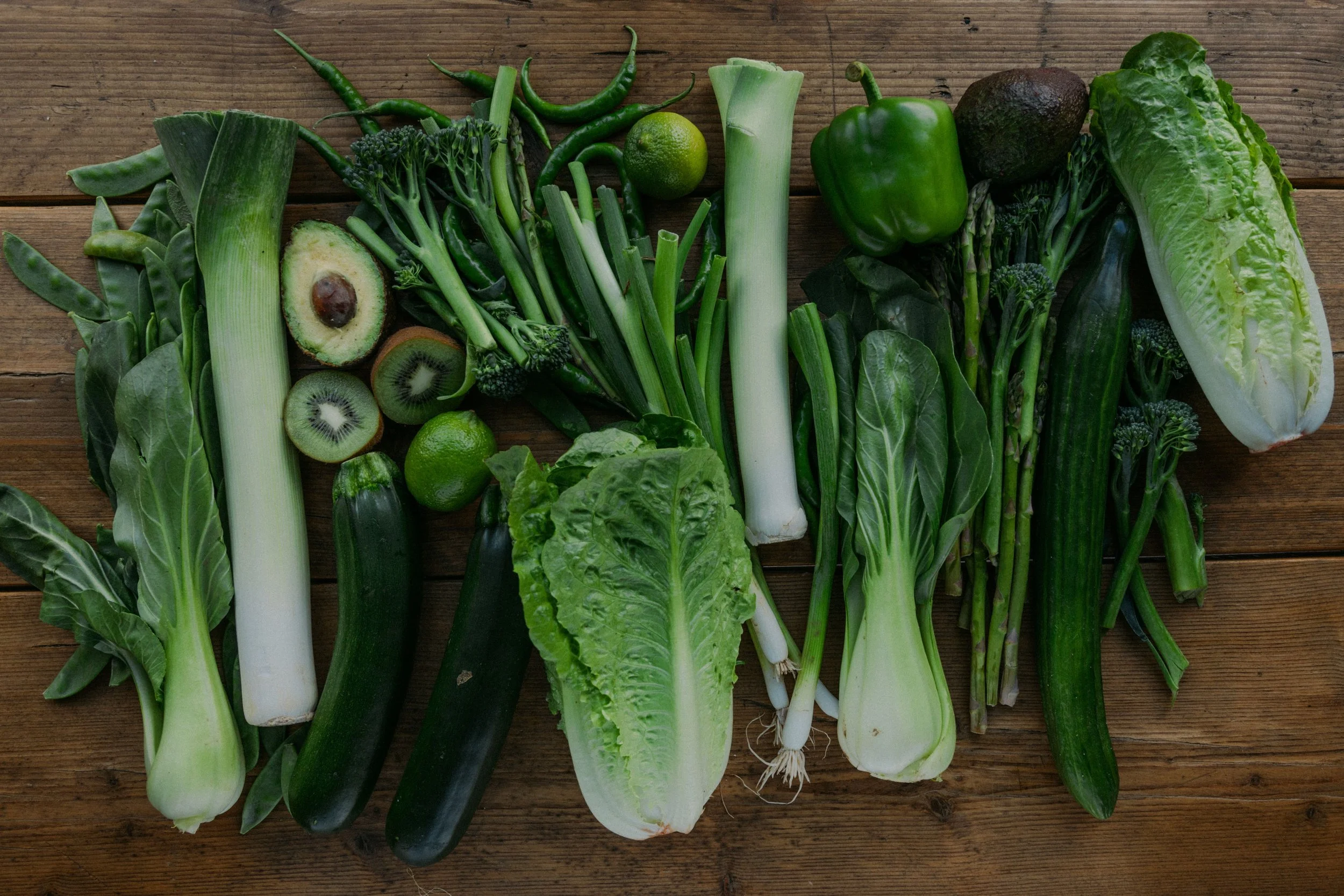
Mastering Mindful Eating: 13 Essential Strategies to Detox from Mindless Munching
After the holidays or any time you want to improve your relationship with food, use these techniques to master mindful eating and regain control of your health.
For better or for worse, the holidays are often focused on food. And not just healthy, nourishing food, but food that may be extra rich, extra sugary, and full of FODMAP Triggers. So how do you get back to a mindful mindset when it comes to eating? Detoxing from mindless eating involves building (or rebuilding) mindful eating habits and breaking free from automatic, unconscious consumption. In this blog post, I am sharing some steps to help you regain control and foster a more mindful relationship with food.
You can start by creating a focus on what your body needs, not what your primitive brain wants. This will help you make decisions and prioritize those decisions that support your focus on health. For me, that focus is captured in this variation on Michael Pollan’s philosophy on food: Eat real food. Mostly plants. Prepare it yourself.
Read on for some specific things you can do to help yourself reset after the holidays.
Raise Awareness:
Start by acknowledging and recognizing your mindless eating habits. Be aware of situations, emotions, or triggers that lead to unconscious eating.
Be Mindful:
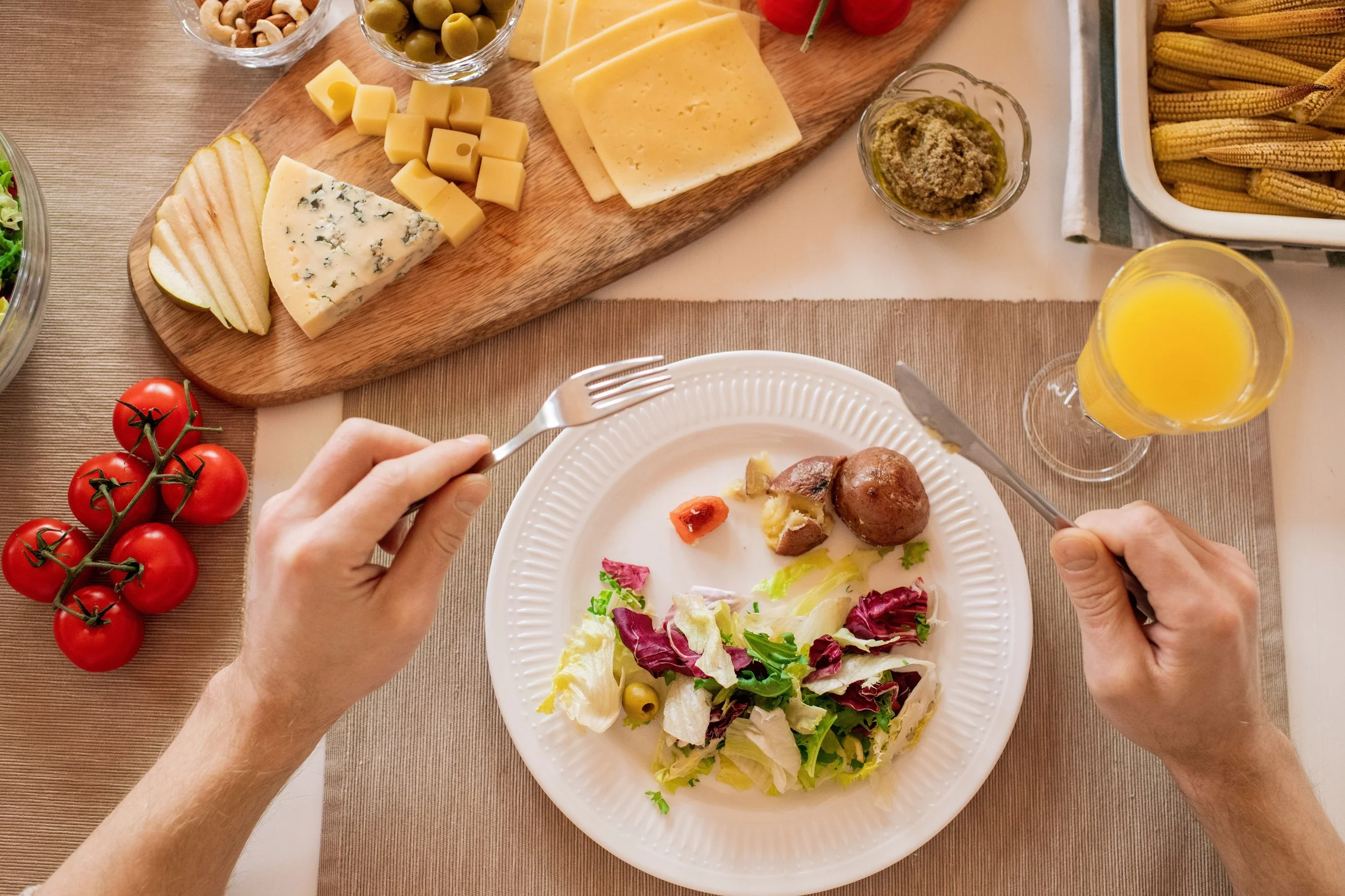
Engage your senses when eating. Sit down and pay attention to the food on your plate. Notice the colors, textures, and flavors of your food. Chew slowly. Savor each bite. This helps you appreciate your food and recognize the signals your body sends when you have had enough.
Create a Distraction-Free Zone:
Designate specific eating areas and times. Avoid eating in front of the TV, or computer, or while scrolling through your phone. Minimize distractions so you can focus on your meal.
Control Your Portion Sizes:
Eat your meals on a plate or in a bowl to maintain a clear sense of how much you’re eating and encourage appropriate portion sizes. Don’t eat out of the container, bag, or carton. This can help prevent overeating.
Meal Planning:
Plan your meals in advance. Having a structured eating schedule reduces the likelihood of impulsive, mindless eating.
Stay Well-Hydrated:
Stay hydrated throughout the day. Sometimes, feelings of hunger are actually signals of dehydration. Start your day with a big glass of water (this can also help regulate your bowel movements). Drink water before reaching for a snack, then wait 15 minutes to be sure you're truly hungry before eating.
Listen to Hunger Cues:
Pay attention to your body's hunger and fullness signals. Eat when you're hungry and stop when you're satisfied, rather than relying on external cues or emotional triggers. Don’t eat so fast that you zoom right past your body’s ability to let you know it’s full! Slow down, chew your food, and put your fork down between bites.
Mindful About Snacking:
If you can break the habit of snacking altogether, that’s a great way to minimize mindless eating. But, if you want to keep snacks in your diet, choose them thoughtfully. Opt for real food here too, and something with protein, fiber, and fat that will be filling and satisfying (a handful of nuts, a few of my Amazing Seed Crackers with cheese or Nutzo Nut & Seed Butter, or some chopped vegetables and lactose-free cottage cheese or Nutzo Nut & Seed Butter are great choices). Be conscious of portion sizes. Sit down and savor your snack rather than eating it on the go.
Emotional Awareness:
Identify emotional triggers for mindless eating. When you feel stressed, bored, or anxious, find alternative ways to cope, such as taking a short walk, practicing deep breathing, or engaging in a hobby. Work on just feeling your emotions instead of letting them drive you to the kitchen to drown them in a bag of chips or a box of cookies. If you give them time, these feelings usually pass within a few minutes, and you can avoid the need to buffer them with food.
Keep a Food Journal:
Track your meals and snacks in a journal or phone app. This helps you become more aware of what, when, and how. much you eat, making it easier to identify patterns of mindless eating. It’s a great way to be “onto yourself” about portions and portion sizes too.
Mindful Grocery Shopping:
Plan your meals and related grocery shopping list ahead of time and stick to it. Avoid shopping when hungry, as this can lead to impulse purchases of unplanned and less nutritious foods.
“Safe” Refrigerator and Pantry Shelves:
Clear out your fridge and pantry of the foods that you tend to eat mindlessly. Often that means the highly processed salty, sugary, or fatty foods that come in boxes and bags. If you live with others and the refrigerator and pantry are shared, then establish certain shelves that are just for you and that contain only the foods you want to be eating. Then you can focus only on those shelves when you’re hungry or preparing a meal. Avoiding temptations is a huge step in the direction of preventing mindless eating in the first place!
Seek Support:
Share your goals with friends, family, or a support group. Having a supportive network can provide encouragement and accountability on your journey toward more mindful eating.
Remember, developing mindful eating habits takes time and patience. Be kind to yourself throughout the process, celebrate small victories, and gradually integrate these practices into your daily life for a sustainable and positive transformation. The more you practice these techniques, the less you overload your body and the better you feel. It’s something to look forward to!
Need help on your journey? Make an appointment and let’s talk!
Have a question you’d like to have answered? Email me at hello@ibsgamechanger.com
Link note: This post may contain affiliate links for you to easily purchase items that are linked. I may earn a small commission from qualifying purchases but none of this costs you a thing so feel free to use the links! In addition, for some items, I have provided a special discount code for IBS Game Changers so be sure to use the code when you purchase an item to get the discount that has been arranged just for you.
More Deliciously Low FODMAP™ Tips and Tools


















Cranberry Orange Muffin Tops (Low FODMAP)
15 Minutes prep • 15 Minutes cook • Low FODMAP • Gluten-Free • Makes 12 - 16
15 Minutes prep • 15 Minutes cook • Low FODMAP • Gluten-Free • Makes 12 - 16 • Ok to make-ahead: Step 1
Traditional muffins can wreak havoc on sensitive stomachs. The gluten, the sugar crash, the bloat that hits an hour later. But what if you could have that perfect golden muffin top without the digestive drama? Enter almond flour: naturally gluten-free, grain-free, and surprisingly gut-friendly. Swap in allulose for a low-FODMAP AND lower-carb version, add fiber-rich cranberries and bright orange zest, and you've got a delicious sweet treat that actually agrees with you.

See this new recipe in my FREE recipe club.
To streamline your search through hundreds of existing recipes, I'm moving the release of my new weekly creations to the Recipe Club on Patreon. In the club, you’ll get access to a treasure trove of low-FODMAP goodness, complete with collections and filters to use as your virtual cookbook!
Here's what awaits you in the club:
Exclusive weekly recipes: Be the first to try my latest delicious low-FODMAP creations!
Simple & Easy: My recipes continue to focus on readily available ingredients and effortless preparation, perfect for family-friendly meals (no more separate low-FODMAP meal prep!).
Hundreds of existing recipes: Gain access to my entire library of low-FODMAP recipes, all conveniently organized.
You can join for free or sign up for only $5/month. Your support fuels my passion for creating new, delicious, and easy-to-make low-FODMAP recipes just for you.
Let's go on this delicious low-FODMAP journey together.
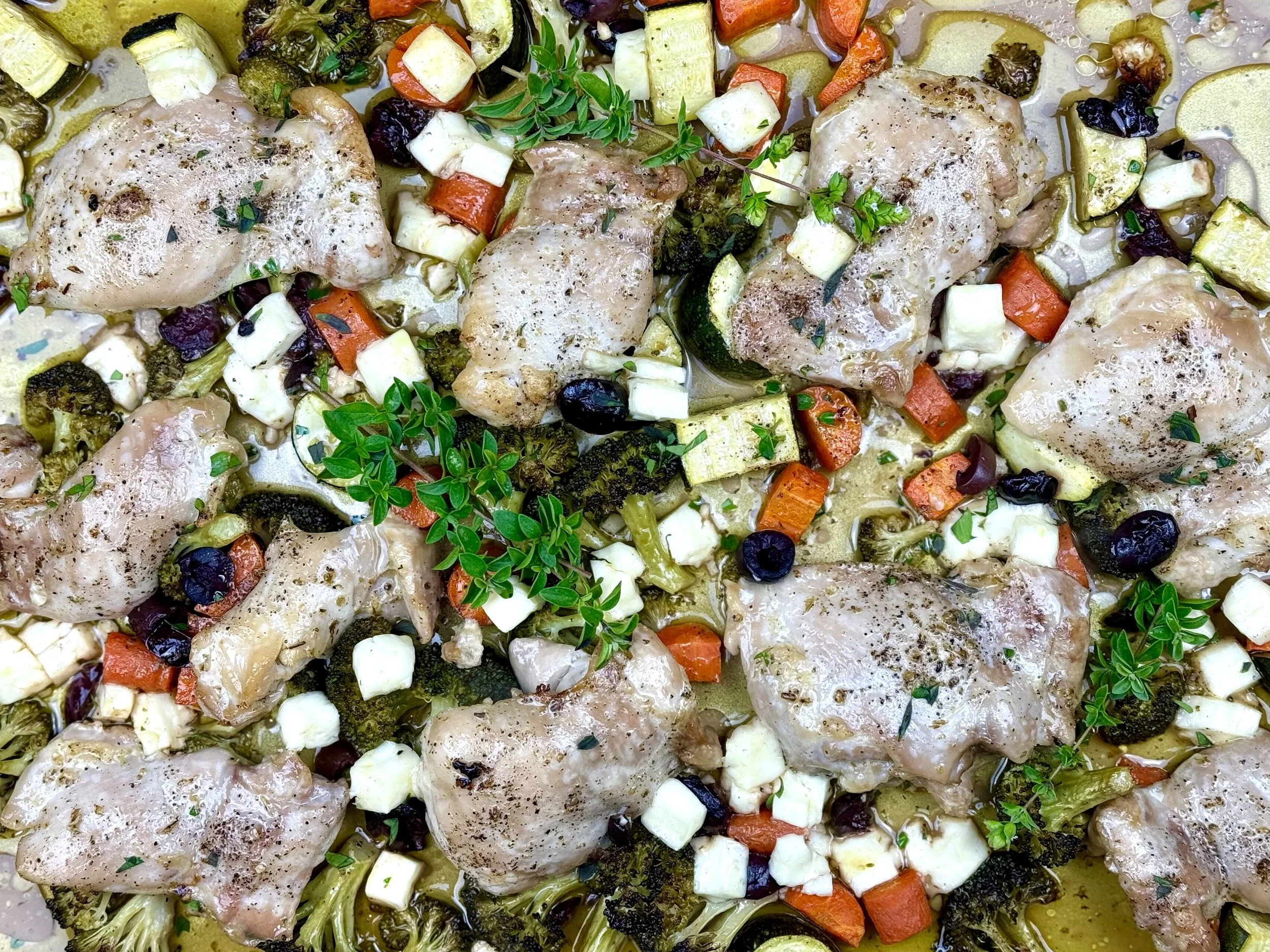
Sheet Pan Greek Chicken with Feta and Roasted Veggies (Low FODMAP)
10 Minutes prep • 35 Minutes cook • Low FODMAP • Gluten-Free • Serves 4
10 Minutes prep • 35 Minutes cook • Low FODMAP • Gluten-Free • Serves 4
When you're craving bright, bold Mediterranean flavors but can't handle the garlic bombs that come with most Greek food, this sheet pan dinner is about to become your new obsession. Juicy chicken thighs, colorful roasted vegetables, and big chunks of tangy feta all get coated in a garlicky-lemony dressing (made gut-friendly with garlic-infused oil) and roasted until everything is golden, tender, and absolutely irresistible.
The best part? Everything cooks together on one pan, creating a rich, flavorful sauce at the bottom that's perfect for soaking up with gluten-free bread or spooning over rice. It's the kind of meal that looks impressive enough for company but is actually easier than ordering takeout, with minimal cleanup to boot.
See this new recipe in my FREE recipe club.
To streamline your search through hundreds of existing recipes, I'm moving the release of my new weekly creations to the Recipe Club on Patreon. In the club, you’ll get access to a treasure trove of low-FODMAP goodness, complete with collections and filters to use as your virtual cookbook!
Here's what awaits you in the club:
Exclusive weekly recipes: Be the first to try my latest delicious low-FODMAP creations!
Simple & Easy: My recipes continue to focus on readily available ingredients and effortless preparation, perfect for family-friendly meals (no more separate low-FODMAP meal prep!).
Hundreds of existing recipes: Gain access to my entire library of low-FODMAP recipes, all conveniently organized.
You can join for free or sign up for only $5/month. Your support fuels my passion for creating new, delicious, and easy-to-make low-FODMAP recipes just for you.